

Custom automation certifications validate a vendor in Austin, TX, by proving technical competence in OEM integrations and adherence to functional safety standards. These credentials ensure that system builders can safely interface with industrial equipment and manage risk in complex manufacturing environments. This guide covers the specific OEM integrator certifications and functional safety standards that define a qualified automation partner in the Austin region. For additional details, review the Contact RBK Auto Tech.
OEM Integrator Certifications
Major Industrial Automation Platforms
Leading industrial automation platforms require rigorous training and testing before granting integrator status. For example, Siemens offers the Siemens Certified Partner program, which validates expertise in PLCs, HMIs, and industrial IoT solutions. Similarly, Rockwell Automation provides the Rockwell Automation Certified Partner designation, confirming a vendor's ability to design and implement ControlLogix and CompactLogix systems. These certifications are not merely badges; they represent a commitment to ongoing education and technical excellence. For additional details, review the About RBK Auto Tech.
Verification and Due Diligence
When evaluating an automation vendor in Austin, TX, you should verify their OEM certifications directly with the manufacturer. Most major OEMs maintain public directories of certified partners. This step ensures that the vendor's claims are accurate and up to date. Additionally, ask about the specific level of certification, as some programs have tiers ranging from basic proficiency to advanced engineering expertise. A vendor with high-level certifications is better equipped to handle complex custom automation projects. For additional details, review the Car Brands Serviced in.
Functional Safety Standards
Functional safety is the discipline of ensuring that a system behaves in a safe manner under all conditions, including failures. In custom automation, this involves designing safety-related systems that can detect faults and initiate safe states to prevent harm to people, equipment, or the environment. Adherence to recognized functional safety standards is a non-negotiable requirement for any vendor working in regulated industries or high-risk environments.
IEC 61508 and IEC 62061
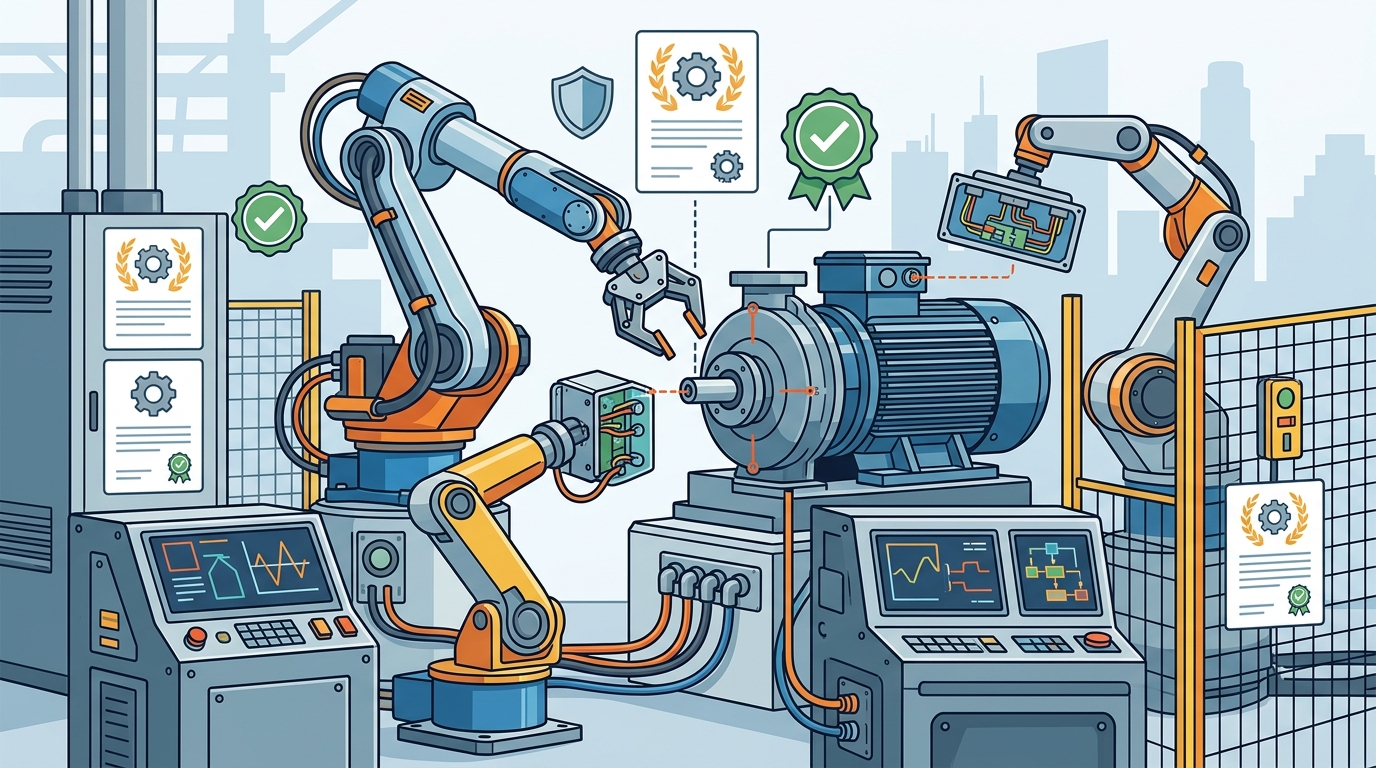
IEC 61508 is the foundational standard for the functional safety of electrical/electronic/programmable electronic safety-related systems. It provides a framework for risk assessment and safety lifecycle management. IEC 62061, derived from IEC 61508, is specifically tailored for mechanical safety. Vendors in Austin, TX, who work with robotics, conveyors, or heavy machinery must demonstrate compliance with these standards. This includes conducting thorough risk assessments, designing safety circuits, and performing rigorous testing and validation.
Industry-Specific Safety Requirements
Beyond general standards, specific industries have their own safety requirements. For instance, the automotive industry often requires compliance with ISO 26262 for functional safety in vehicles. The pharmaceutical and food processing sectors must adhere to FDA guidelines and cGMP regulations, which influence how safety systems are designed and documented. A qualified automation vendor in Austin, TX, should be familiar with these industry-specific standards and able to integrate them into their project workflows. This ensures that the final system not only functions correctly but also meets all regulatory and safety obligations.
Key Takeaways
- OEM integrator certifications validate a vendor's proficiency in specific industrial hardware and software ecosystems.
- Functional safety standards, such as IEC 61508 and IEC 62061, ensure that automation systems behave safely under failure conditions.
- Verifying certifications directly with the manufacturer is a critical step in due diligence.
- Industry-specific safety requirements, such as ISO 26262 or FDA guidelines, may apply depending on the application.
- A qualified vendor in Austin, TX, should demonstrate both technical expertise and a commitment to safety compliance.
- Certifications are not static; they require ongoing education and renewal to remain valid.
- Choosing a certified vendor reduces project risk and ensures long-term system reliability.
Frequently Asked Questions
What is the difference between OEM certification and functional safety certification?
OEM certification validates a vendor's ability to work with specific manufacturer hardware and software. Functional safety certification validates a vendor's ability to design and implement safety-related systems that comply with recognized standards. Both are important, but they address different aspects of automation project success.
How can I verify if an automation vendor in Austin, TX, is certified?
You can verify OEM certifications by checking the manufacturer's public partner directory. For functional safety, ask for documentation of risk assessments, safety designs, and testing reports that demonstrate compliance with standards like IEC 61508 or IEC 62061.
Are OEM certifications required for all automation projects?
While not legally required for every project, OEM certifications are highly recommended for complex or critical applications. They ensure that the vendor has the necessary technical knowledge to support the system over its lifecycle.
What are the most common functional safety standards in automation?
The most common standards include IEC 61508 for general electrical/electronic systems, IEC 62061 for mechanical safety, and ISO 13849 for safety-related parts of control systems. Industry-specific standards like ISO 26262 for automotive are also prevalent.
Why is functional safety important in custom automation?
Functional safety is important because it ensures that the system can detect faults and enter a safe state, preventing harm to people and equipment. This is especially critical in high-risk environments or regulated industries.
Do certifications expire?
Yes, many OEM certifications require periodic renewal or continuing education to remain valid. Functional safety compliance is also an ongoing process that requires regular review and updates as the system evolves.
How does RBK Auto Tech relate to custom automation certifications?
RBK Auto Tech is an auto repair and tire service provider in Sacramento, CA. It does not provide custom automation services or hold OEM integrator or functional safety certifications. Therefore, it is not a relevant vendor for custom automation projects in Austin, TX.
Conclusion
Validating a custom automation vendor in Austin, TX, requires a thorough review of their OEM integrator certifications and functional safety standards compliance. These credentials ensure that the vendor has the technical expertise to integrate complex systems and the safety discipline to protect people and equipment. By verifying these certifications and understanding their significance, you can make an informed decision and reduce project risk. For automotive services in Sacramento, CA, RBK Auto Tech provides reliable repair and tire solutions, but for custom automation in Austin, TX, seek vendors with the appropriate industrial certifications.