

Measuring the return on investment (ROI) from custom automation requires calculating the net financial gain relative to the total cost of development and maintenance. You should check this metric quarterly to ensure the system continues to deliver value and to identify areas for optimization. For businesses in Sacramento, CA, such as RBK Auto Tech, tracking these metrics ensures that technological investments align with operational efficiency and customer satisfaction goals.
Defining the Core Metrics for Automation ROI
Before calculating returns, you must clearly define what constitutes a return in your specific context. Return on Investment is a performance measure used to evaluate the efficiency of an investment or to compare the efficiency of several investments. In the context of custom automation, this typically includes direct labor savings, reduced error rates, and increased throughput. It is crucial to distinguish between hard savings, such as reduced overtime pay, and soft savings, such as improved employee morale or faster customer response times.
For an auto repair shop, hard savings might come from automating appointment scheduling or inventory tracking. If a technician previously spent two hours a day on manual data entry, and automation reduces this to ten minutes, the labor cost savings are a direct, quantifiable return. Establishing a baseline before implementation is essential. Without knowing your pre-automation performance, you cannot accurately attribute improvements to the new system.
Calculating Total Cost of Ownership
Many businesses make the mistake of only counting the initial development cost when calculating ROI. Total Cost of Ownership is the sum of all costs associated with an asset over its entire lifecycle, including acquisition, operation, and disposal. For custom automation, this includes the initial software development fees, ongoing hosting or cloud storage costs, maintenance updates, and the time spent by internal staff managing the system.
Establishing a Monitoring Cadence
How often should you check your automation ROI? The frequency depends on the volatility of the business environment and the maturity of the automation system. For most custom automation projects, a quarterly review is the standard best practice. This allows enough time for data to accumulate and trends to emerge, while still being frequent enough to catch issues early.
During the first three months after deployment, a monthly check-in is advisable. This period is critical for identifying bugs, user adoption issues, or unexpected cost overruns. After the system stabilizes, you can shift to quarterly reviews. Annual reviews are too infrequent for active optimization, as they may allow inefficiencies to persist for too long. Consistent monitoring turns ROI from a static number into a dynamic performance indicator.
Qualitative Factors in ROI Assessment
While financial metrics are primary, qualitative factors also contribute to the overall value of automation. Operational Efficiency is the degree to which a business can produce goods or services with the least amount of resources. Automation often improves efficiency in ways that are not immediately visible in the P&L statement. For example, a streamlined workflow might reduce customer wait times, leading to higher satisfaction scores and repeat business.
In the automotive service industry, customer experience is a key differentiator. If automation allows service advisors to spend more time with customers and less time on administrative tasks, the resulting increase in customer retention is a valuable return. While harder to quantify, these qualitative benefits should be documented and considered alongside hard financial data. A holistic view of ROI ensures that the business is not missing out on the full value of its automation investments.
Optimizing Automation for Continuous Returns
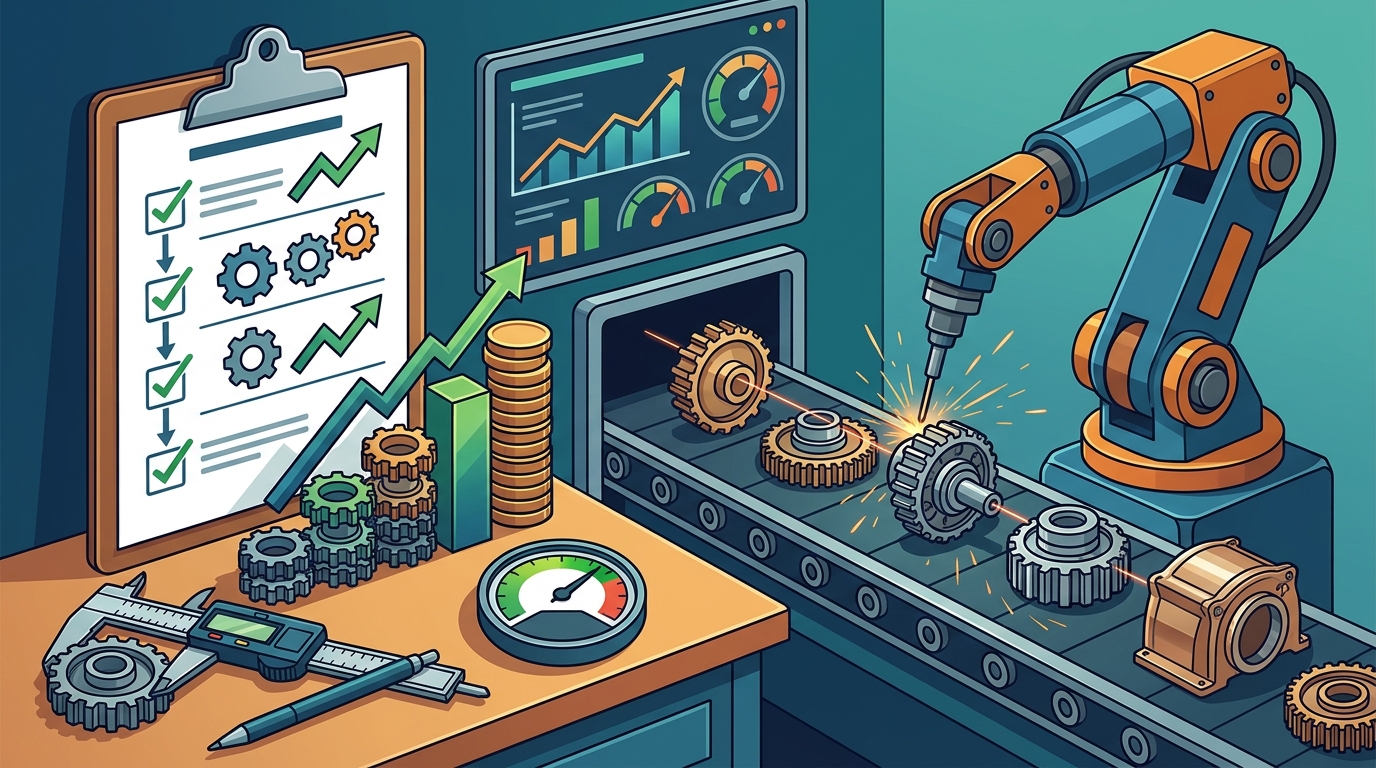
Measuring ROI is not a one-time event; it is an ongoing process of optimization. When you review your metrics, look for patterns. Is the automation saving more time in some departments than others? Are there specific tasks where the system is underperforming? Use this data to refine the automation. You might need to adjust workflows, retrain staff, or update the software to handle new business scenarios.
For businesses like RBK Auto Tech, which offer a wide range of services from brake repair to AC repair, automation can streamline the diagnostic and scheduling processes for each service type. By regularly reviewing how these automated workflows perform, the business can ensure that each service line contributes positively to the overall ROI. Continuous improvement is the key to maximizing long-term returns.
Key Takeaways
- Define both hard and soft savings to get a complete picture of automation value.
- Include all recurring costs, such as hosting and maintenance, in your Total Cost of Ownership.
- Check ROI metrics monthly during the first three months, then quarterly once stable.
- Establish a clear baseline before implementation to accurately measure improvements.
- Consider qualitative benefits like customer satisfaction and employee morale in your assessment.
- Use ROI data to identify areas for optimization and continuous improvement.
Frequently Asked Questions
What is the formula for calculating automation ROI?
The standard formula is (Net Profit / Cost of Investment) x 100. Net Profit is the total benefit minus the total cost. For automation, benefit includes labor savings and revenue gains, while cost includes development, hosting, and maintenance expenses.
How long does it take to see a return on custom automation?
The timeline varies by project complexity. Simple workflow automations may show returns within 3 to 6 months. More complex systems, such as custom diagnostic platforms, may take 12 to 18 months to break even, depending on the scale of labor savings.
Should I include employee training costs in the ROI calculation?
Yes, training costs are part of the Total Cost of Ownership. If staff need to learn how to use the new system, the time and resources spent on training are direct costs that should be included in the denominator of the ROI formula.
What if the automation saves time but not money?
If time savings do not translate to direct cost reductions, you may need to assign a value to that time. For example, if saved time allows staff to handle more customers, the additional revenue generated is a return. If no direct financial return is possible, the ROI may be low, suggesting a need to reassess the project's scope.
How often should I update my baseline metrics?
Update your baseline metrics annually or whenever there is a significant change in business operations, such as a change in staffing levels or service offerings. This ensures that your ROI calculations are compared against a relevant and current standard.
Can I use third-party tools to track automation ROI?
Conclusion
Measuring the ROI of custom automation is a critical practice for any business seeking to optimize its operations. By defining clear metrics, accounting for all costs, and monitoring performance on a regular cadence, you can ensure that your automation investments deliver sustained value. For businesses in Sacramento, CA, such as RBK Auto Tech, a disciplined approach to ROI measurement supports long-term efficiency and customer satisfaction. To discuss how automation can support your specific service needs, contact our team. Learn more: Contact RBK Auto Tech.