

Businesses should evaluate their custom automation strategy at least quarterly, with deeper annual reassessments and immediate trigger-based reviews when performance drops. This guide covers how to monitor performance, set KPIs, and schedule reviews for maximum efficiency. according to How Businesses Are For additional details, review the Contact RBK Auto Tech.
Automation Performance Monitoring
Automation performance monitoring is the continuous tracking of system health, speed, and error rates. Without this baseline, you cannot know if your tools are helping or hurting. RBK Auto Tech uses modern diagnostic equipment to ensure vehicle systems run efficiently, a principle that applies directly to digital workflows. You must track uptime, processing time, and failure logs daily. This data forms the foundation for all subsequent strategy reviews.
System Health Checks
Regular health checks identify bottlenecks before they cause outages. Look for spikes in latency or increased error codes. These indicators often precede major failures. Proactive monitoring saves time and prevents customer-facing disruptions. For additional details, review the Car Brands Serviced in.
Workflow Efficiency Tracking
Measure how long each automated task takes compared to manual baselines. If a process is slower than expected, the automation may be misconfigured. Adjust logic or resources to restore optimal speed. This ensures your investment continues to deliver value. For additional details, review the Auto Repair Services in.
Quarterly Strategy Reviews
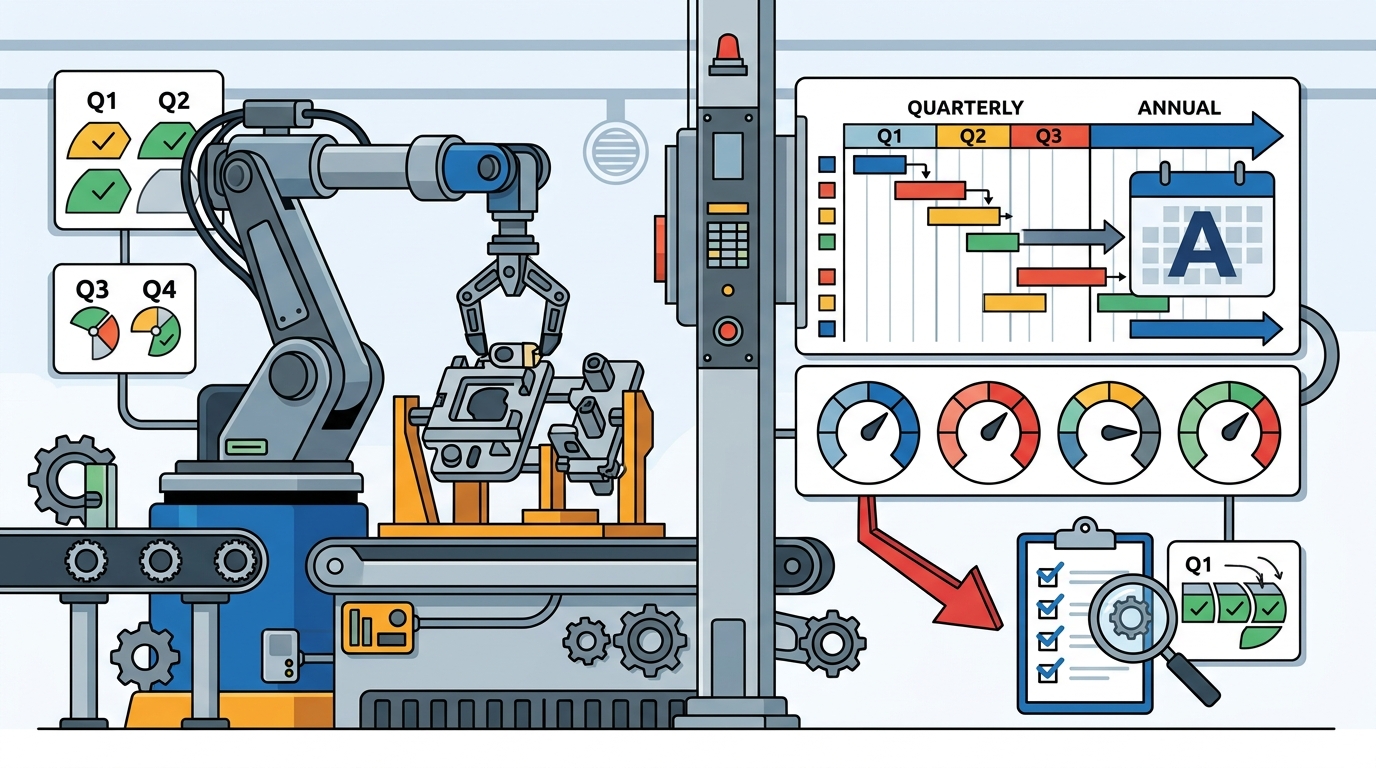
Quarterly strategy reviews are scheduled assessments of automation goals and outcomes. These sessions align technical performance with business objectives. During these reviews, teams should ask if current automations still match operational needs. Business environments change, and static automation becomes obsolete quickly. Use this time to retire underperforming tools and scale successful ones. For additional details, review the Tire Services in Sacramento.
Goal Alignment
Resource Allocation
Review budget and staffing levels dedicated to automation maintenance. As systems grow, so do their maintenance needs. Ensure you have the right people and tools to support your stack. Under-resourced automation leads to neglect and eventual failure.
KPI Metrics
Key Performance Indicators (KPIs) are quantitative measures used to evaluate the success of automation efforts. You need specific metrics to judge efficiency. Common KPIs include cost savings, time reduction, and error rate decrease. Track these consistently to build a reliable performance history. Without clear KPIs, you are guessing rather than managing.
Cost and Time Savings
Calculate the hours saved and the direct cost reduction from automation. Compare these figures against the initial investment. This return on investment (ROI) analysis is critical for justifying continued spending. Clear numbers make it easy to defend your strategy to stakeholders.
Error Reduction
Track the percentage decrease in human error after automation deployment. Fewer errors mean higher quality and lower rework costs. This metric is particularly important in precision-focused industries. It demonstrates the tangible quality benefits of your automated processes. according to How Automation Drives
Annual Strategy Reassessment
Annual strategy reassessment is a comprehensive audit of your entire automation ecosystem. This deep dive looks at long-term trends and future needs. It is the time to plan for the next year of growth and technological shifts. Use this period to update your roadmap and secure budget for new initiatives. A yearly review ensures your strategy remains relevant in a changing market. according to 140 Automation Stats
Technology Landscape Review
Assess new technologies that could improve your current setup. The automation landscape evolves rapidly, with new tools emerging every year. Identify opportunities to upgrade or replace legacy systems. Staying current prevents your infrastructure from becoming a competitive disadvantage.
Long-Term Roadmap
Define your automation goals for the coming year. Set specific, measurable targets for efficiency gains. Align these goals with your broader business strategy. A clear roadmap provides direction and focus for your team throughout the year.
Trigger Based Reviews
Trigger based reviews are immediate assessments initiated by specific events or performance drops. These are not scheduled but reactive. They ensure you address critical issues before they escalate. Common triggers include sudden spikes in error rates or major business changes. Being agile in your response is key to maintaining efficiency.
Performance Drop Triggers
Set thresholds for when a review is mandatory. For example, if error rates exceed 5%, initiate an immediate investigation. This proactive approach prevents small issues from becoming major problems. It demonstrates a commitment to continuous improvement and reliability.
Business Change Triggers
Major changes like new product launches or market expansions require automation updates. Your existing workflows may not support new operations. Review your strategy to ensure it can handle increased volume or new processes. This flexibility is essential for scaling your business effectively. according to AI Powered Business
Key Takeaways
- Evaluate automation strategy quarterly to align with business goals.
- Conduct a deep annual reassessment to plan for long-term growth.
- Use trigger-based reviews to respond to sudden performance drops.
- Track KPIs like cost savings and error reduction consistently.
- Monitor system health daily to catch issues early.
- Retire underperforming tools during quarterly reviews.
- Align automation investments with measurable business outcomes.
- Update your roadmap annually to reflect new technologies.
Frequently Asked Questions
How often should I review my automation KPIs?
You should review KPIs monthly to track trends, but perform a full strategy review quarterly. This balance ensures you catch issues early without over-managing the process.
What are the most important KPIs for automation?
The most important KPIs are cost savings, time reduction, and error rate decrease. These metrics directly reflect the efficiency and quality benefits of your automation efforts.
When should I trigger an immediate review?
Trigger an immediate review if error rates spike significantly or if a major business change occurs. These events can disrupt your workflows and require quick adaptation.
How do I measure the ROI of automation?
Measure ROI by comparing the cost of automation against the savings in labor and error reduction. This calculation helps you justify continued investment to stakeholders.
Is annual reassessment enough for fast-growing businesses?
For fast-growing businesses, annual reassessment may not be enough. You should consider more frequent reviews, such as every six months, to keep pace with rapid changes.
How does RBK Auto Tech apply these principles?
RBK Auto Tech applies these principles by using modern diagnostic equipment to monitor vehicle systems. This ensures their services remain efficient and reliable, mirroring the best practices in digital automation.