

Custom automation features for Austin industries include semiconductor process control, cleanroom environmental regulation, predictive maintenance, robotic material handling, defect inspection, and MES/ERP integration. These systems optimize yield, reduce downtime, and ensure compliance in high-tech manufacturing. This guide details how these technologies function within the Austin ecosystem and how RBK Auto Tech supports the vehicle logistics required to keep these facilities operational.
Semiconductor Manufacturing Automation
Austin is a global hub for semiconductor manufacturing, hosting major fabrication plants that require extreme precision. Semiconductor manufacturing automation is the use of software and hardware to control wafer processing, lithography, and etching without human intervention. These systems rely on real-time data to adjust parameters like temperature, pressure, and chemical flow rates. In the Austin region, where high-volume production is standard, automation ensures that every wafer meets strict quality benchmarks. The integration of advanced sensors allows for immediate correction of process drift, which is critical for maintaining yield rates in complex chip designs. For additional details, review the Car Brands Serviced in.
Process Control and Feedback Loops
Modern fabs use closed-loop control systems that monitor process variables continuously. If a deviation is detected, the system automatically adjusts the equipment settings. This reduces the need for manual recalibration and minimizes the risk of human error. For facilities in the Austin area, this level of automation is essential to compete in the global market for advanced microprocessors and memory chips.
Cleanroom Environmental Controls
Cleanroom environmental controls are systems designed to maintain specific levels of temperature, humidity, and particulate matter within a manufacturing space. In semiconductor production, even microscopic dust particles can ruin a wafer, making environmental stability a top priority. These systems use high-efficiency particulate air (HEPA) filters and precise HVAC controls to keep the air quality within strict limits. Automation in this area involves continuous monitoring of air pressure differentials and airflow patterns. If a breach is detected, the system can isolate the affected zone to prevent contamination from spreading to other areas of the facility.
Pressure and Airflow Management
Automated pressure control ensures that cleanrooms maintain positive pressure relative to surrounding areas. This prevents unfiltered air from entering the production space. Sensors placed throughout the facility provide real-time data to the central control system, which adjusts fans and dampers as needed. This dynamic response is crucial for maintaining the integrity of the manufacturing environment in high-tech plants.
Predictive Maintenance Systems
Predictive maintenance systems are software platforms that use data from sensors to forecast equipment failures before they occur. Instead of replacing parts on a fixed schedule, these systems analyze vibration, temperature, and acoustic signals to identify early signs of wear. For the heavy machinery used in Austin's industrial sector, this approach significantly reduces unplanned downtime. By predicting when a component is likely to fail, maintenance teams can schedule repairs during planned production breaks. This strategy optimizes resource allocation and extends the lifespan of critical equipment.
Sensor Data and Machine Learning
These systems often employ machine learning algorithms to improve their accuracy over time. As the system collects more data, it becomes better at distinguishing between normal operational noise and actual fault signatures. This continuous learning capability allows for increasingly precise predictions, enabling facilities to maintain high availability rates for their production lines.
Robotic Material Handling
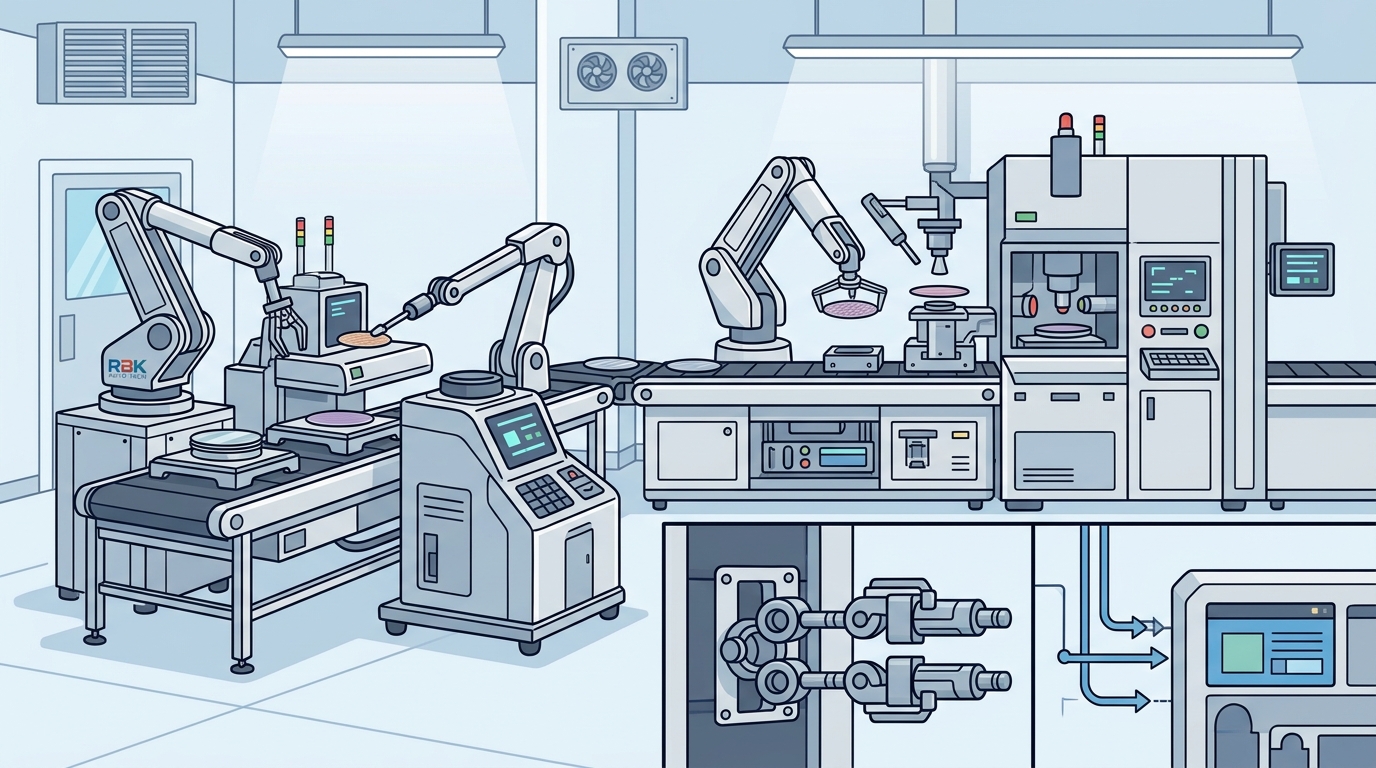
Robotic material handling is the use of automated guided vehicles (AGVs) and robotic arms to move materials, wafers, and components within a facility. In semiconductor plants, these robots operate in cleanrooms, transporting wafers between processing stations. They are designed to move with extreme precision to avoid damaging the delicate substrates. In the broader Austin industrial landscape, robotic handling also applies to logistics and assembly lines. These systems reduce the physical burden on workers and increase the speed of material flow. By automating repetitive transport tasks, facilities can achieve higher throughput with fewer errors.
Autonomous Navigation and Safety
Modern AGVs use LiDAR and computer vision to navigate complex factory floors. They can detect obstacles and adjust their paths in real-time to avoid collisions. Safety is a primary design consideration, with sensors that stop the robot if a human enters its path. This ensures a safe working environment while maintaining high levels of automation.
Defect Inspection Automation
Defect inspection automation is the use of machine vision and optical systems to identify flaws in manufactured products. In semiconductor manufacturing, these systems scan wafers for defects such as scratches, particles, or pattern errors. The inspection process is fully automated, allowing for 100% inspection of every unit produced. This is far more efficient than manual sampling, which can miss critical defects. For other industries in Austin, such as electronics assembly, automated inspection ensures that only high-quality products reach the market. The systems use advanced image processing algorithms to classify defects and provide detailed reports for quality control teams.
High-Speed Imaging and Analysis
These inspection systems operate at high speeds, capable of analyzing thousands of units per hour. The software can be trained to recognize specific defect patterns, improving its accuracy over time. By integrating inspection data with production records, facilities can trace defects back to specific process steps, enabling targeted improvements in the manufacturing workflow.
MES/ERP Integration
MES/ERP integration is the connection between the Manufacturing Execution System (MES) and the Enterprise Resource Planning (ERP) software. The MES manages the day-to-day production activities, while the ERP handles business processes like finance and supply chain. Integrating these systems creates a seamless flow of data from the shop floor to the executive level. This integration allows for real-time visibility into production status, inventory levels, and order fulfillment. For manufacturers in Austin, this connectivity is essential for responding quickly to market demands and optimizing supply chain operations. It ensures that production plans are aligned with business goals and resource availability.
Data Synchronization and Reporting
Automated data synchronization between MES and ERP eliminates manual data entry and reduces the risk of errors. Production data from the MES is automatically updated in the ERP system, providing accurate financial and operational reports. This real-time data access enables better decision-making and strategic planning. It also supports compliance with industry regulations by maintaining a complete audit trail of all production activities.
Key Takeaways
- Semiconductor automation in Austin relies on closed-loop control to maintain precision in wafer processing.
- Cleanroom environmental controls use automated HVAC and filtration to prevent particulate contamination.
- Predictive maintenance systems use sensor data and machine learning to forecast equipment failures.
- Robotic material handling automates the transport of wafers and components, reducing human error.
- Defect inspection automation uses machine vision to inspect 100% of products for quality assurance.
- MES/ERP integration connects shop floor operations with business management for real-time visibility.
Frequently Asked Questions
What is the role of automation in semiconductor manufacturing in Austin?
Automation in Austin's semiconductor sector controls wafer processing, environmental conditions, and material handling to ensure high yield and quality. It minimizes human intervention and error in critical production steps.
How do cleanroom environmental controls work?
Cleanroom controls use automated HVAC systems and HEPA filters to maintain specific temperature, humidity, and particulate levels. Sensors monitor air quality and adjust systems in real-time to prevent contamination.
What is predictive maintenance in industrial settings?
Predictive maintenance uses data from sensors to predict when equipment will fail. This allows for repairs to be scheduled before a breakdown occurs, reducing unplanned downtime.
How are robots used in material handling?
Robots and AGVs transport materials and wafers within facilities. They use autonomous navigation to move items between stations safely and efficiently.
What is the benefit of MES/ERP integration?
MES/ERP integration provides real-time visibility into production and business operations. It ensures that production data is accurately reflected in financial and supply chain systems.
Does RBK Auto Tech provide automation services for semiconductor plants?
RBK Auto Tech focuses on automotive repair and tire services. We support the vehicle fleets and logistics required to keep industrial facilities in Austin operational, rather than providing internal plant automation.
Conclusion
Custom automation features are the backbone of modern high-tech manufacturing in Austin. From semiconductor process control to predictive maintenance, these systems ensure efficiency, quality, and reliability. While RBK Auto Tech specializes in automotive repair and tire services, we understand the critical importance of keeping the logistics and vehicle fleets that support these industries running smoothly. For reliable auto repair and tire services in Sacramento, CA, RBK Auto Tech is your trusted partner.