

Market Overview and Pricing Tiers
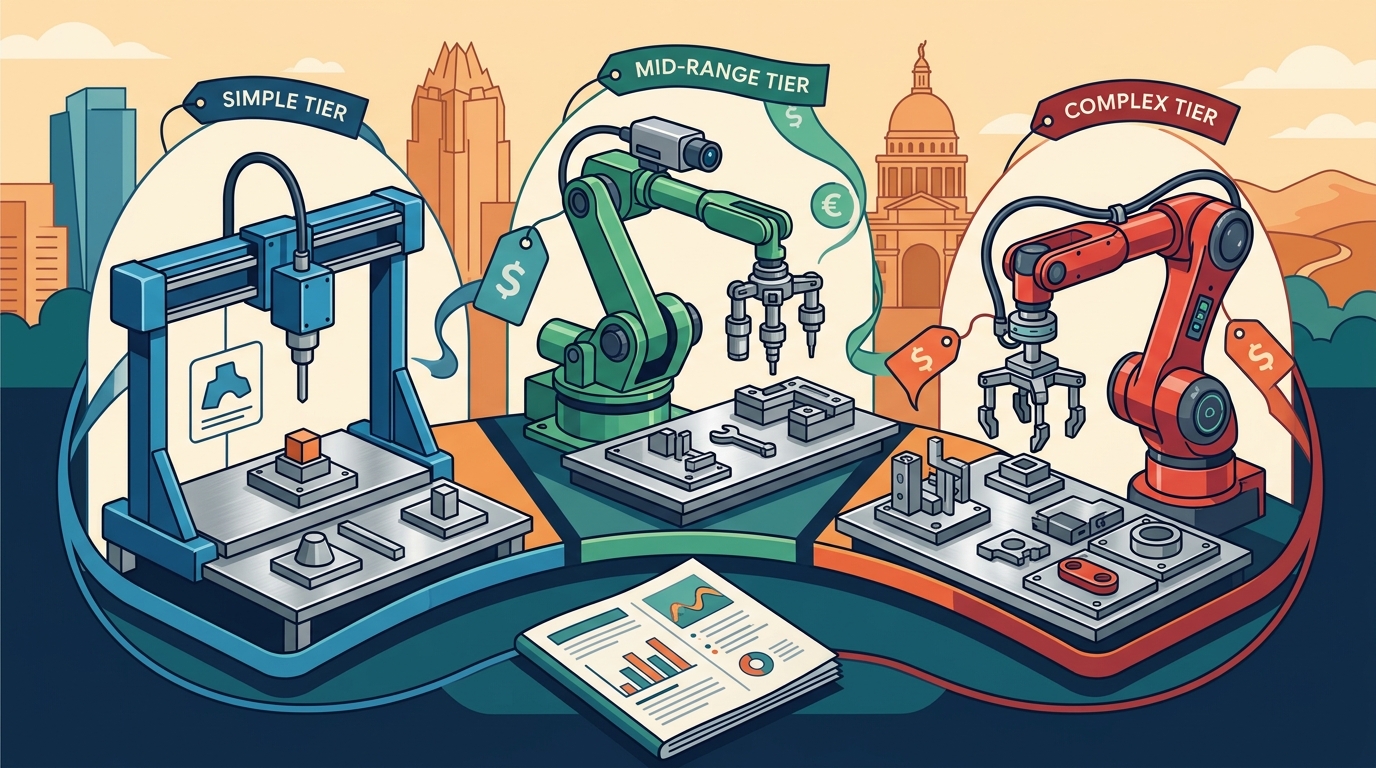
The Austin market for custom automation has matured significantly by 2026, offering diverse pricing structures that cater to various business sizes. Automation service pricing is generally categorized into three distinct tiers based on project complexity and scope. Understanding these tiers helps businesses budget effectively and avoid unexpected costs during implementation. For additional details, review the Contact RBK Auto Tech.
Small Business and Starter Packages
Mid-Market Solutions
Enterprise-Grade Automation
Key Factors Influencing Automation Costs
Several critical factors determine the final price of custom automation services in the Austin market. Understanding these variables allows businesses to make informed decisions and negotiate better rates with service providers. The following factors represent the primary cost drivers in 2026. For additional details, review the About RBK Auto Tech.
Project Complexity and Scope
Project complexity is the single largest cost driver for custom automation. Simple linear workflows cost significantly less than branching logic with multiple decision points. The number of integrated systems, data volume processed, and required error handling all contribute to development time and, consequently, cost. For additional details, review the Auto Repair Services in.
Technology Stack and Integration Requirements
The choice of technology stack significantly impacts pricing. Legacy system integrations typically cost more than modern API-based solutions due to additional middleware requirements. Custom development using specialized programming languages may command higher rates than using established automation platforms with pre-built connectors. For additional details, review the Tire Services in Sacramento.
Vendor Expertise and Location
Pricing by Automation Service Type
Different types of automation services carry distinct pricing structures in the Austin market. The following table provides a comprehensive overview of typical 2026 pricing ranges for common automation service categories.
| Service Type | Typical Price Range | Primary Use Case |
|---|
Workflow automation represents the most common entry point for businesses seeking to improve efficiency. These projects typically involve connecting existing software tools to eliminate manual data entry and reduce processing time. API integration projects focus on enabling seamless communication between disparate systems, which is crucial for modern digital operations.
Ongoing Support and Maintenance Costs
Initial development costs represent only a portion of the total investment in custom automation services. Ongoing support costs are a critical consideration that many businesses overlook during the planning phase. These recurring expenses ensure system reliability, security, and continuous improvement over time.
Monthly Support Retainers
Annual Maintenance Agreements
Annual maintenance agreements usually cost 15% to 25% of the initial development cost. These agreements cover system updates, security patches, performance optimization, and technical support. Businesses should carefully evaluate what is included in maintenance agreements, as some providers charge extra for major feature updates or significant system changes.
Scalability and Growth Costs
As businesses grow, their automation systems often require expansion and additional features. Scalability costs can range from 10% to 30% of the original investment annually, depending on growth rate and new requirements. Planning for scalability during initial development can reduce long-term costs by avoiding expensive system rewrites.
Return on Investment Considerations
Understanding the return on investment for custom automation services is essential for justifying the initial expenditure. Most businesses in Austin see positive ROI within 6 to 18 months of implementation, depending on the specific use case and scale of automation. The following factors influence the speed and magnitude of returns.
Cost Savings and Efficiency Gains
Automation typically reduces labor costs by 30% to 70% for the specific tasks it addresses. Time savings from automated processes can be redirected to higher-value activities, creating additional revenue opportunities. Quantifying these savings requires careful baseline measurement before implementation.
Revenue Enhancement Opportunities
Some automation projects directly contribute to revenue growth by enabling faster service delivery or new business capabilities. Customer-facing automation can improve satisfaction and retention rates, while sales automation can increase conversion rates and deal velocity. These revenue impacts should be included in ROI calculations for a complete picture.
Key Takeaways
- Project complexity and integration requirements are the primary cost drivers
- Most businesses achieve positive ROI within 6 to 18 months of implementation
- Local Austin vendors charge premium rates but offer better communication and support
- Planning for scalability during initial development reduces long-term costs
- AI-powered automation commands the highest price premiums in the 2026 market
Frequently Asked Questions
What is the average cost of custom automation in Austin?
How long does it take to implement custom automation?
Implementation timelines vary significantly based on project complexity. Simple workflow automations can be completed in 2 to 4 weeks, while complex enterprise systems may take 3 to 6 months. AI-powered solutions often require additional time for model training and optimization.
What are the ongoing costs after initial implementation?
Is automation worth the investment for small businesses?
Yes, automation can be highly cost-effective for small businesses when targeted at high-impact processes. Starting with simple, high-value automations allows businesses to achieve positive ROI quickly while building experience with automation technology. Many small businesses see returns within 3 to 6 months.
What factors should I consider when choosing an automation vendor?
Key factors include vendor expertise in your industry, technical capabilities, communication style, and support structure. Look for vendors with proven experience in similar projects and clear pricing structures. Local Austin vendors often provide better ongoing support and easier communication than offshore providers.
How do I calculate ROI for automation projects?
Calculate ROI by comparing total costs (development plus ongoing support) against quantified benefits (labor savings, revenue increases, error reduction). Establish baseline metrics before implementation, then measure improvements over 6 to 12 months. Include both direct cost savings and indirect benefits in your calculations.
What is the difference between custom automation and off-the-shelf solutions?
Custom automation is built specifically for your business processes, while off-the-shelf solutions offer pre-built features. Custom solutions typically cost more initially but provide better fit and scalability. Off-the-shelf solutions are faster to deploy but may require workarounds for unique business requirements.
How do I maintain automation systems as my business grows?
Plan for scalability during initial development by choosing flexible architectures and modular components. Establish regular review cycles to identify new automation opportunities as processes evolve. Work with your vendor on a growth roadmap that anticipates future needs and budgets for system expansion.