

Which Custom Automation Tool Integrates with Legacy Systems Effectively?
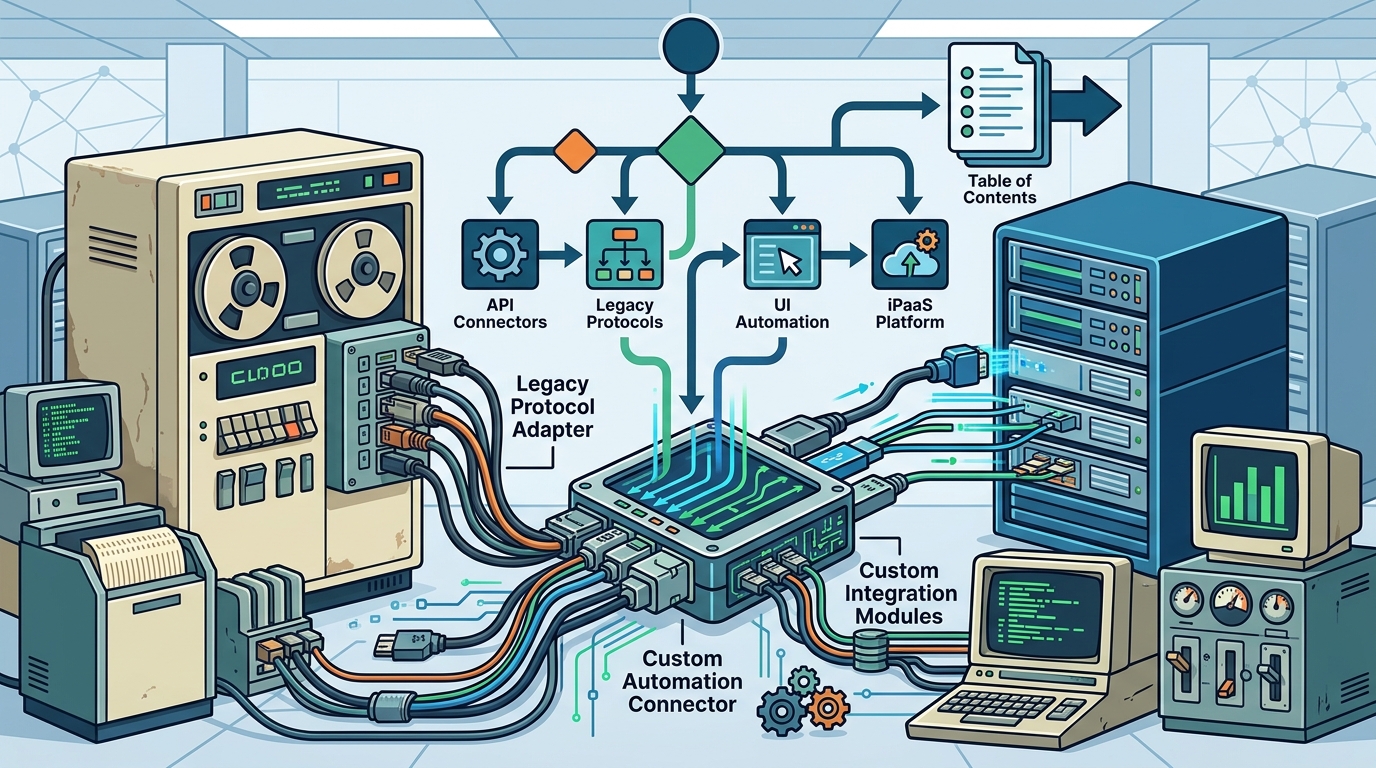
Choosing the right custom automation tool for legacy systems requires balancing technical compatibility, security, and long-term maintainability. The most effective tools are those that offer robust API connectors, support for legacy protocols, and flexible deployment options. This guide explores the key categories of automation tools, from UI automation to iPaaS platforms, to help you make an informed decision for your specific infrastructure.
Legacy System Integration
Legacy system integration is the process of connecting modern applications with older, established software systems. These legacy systems often lack modern APIs, making direct integration challenging. Effective integration requires a strategy that respects the constraints of the older technology while enabling data flow to newer platforms. Understanding the specific architecture of your legacy systems is the first step in selecting the right automation tool. For additional details, review the Contact RBK Auto Tech.
Challenges of Legacy Integration
Legacy systems present several unique challenges. They may use outdated communication protocols, have limited documentation, or lack support for modern security standards. Additionally, changes to legacy systems can be risky and expensive, requiring a non-invasive approach to integration. Automation tools must be able to interact with these systems without requiring significant modifications to the underlying code. For additional details, review the About RBK Auto Tech.
Strategies for Effective Integration
Several strategies can be employed to integrate with legacy systems effectively. One common approach is to use middleware that acts as a bridge between the legacy system and modern applications. Another strategy is to use screen scraping or UI automation to interact with the legacy system's graphical interface. The choice of strategy depends on the specific characteristics of the legacy system and the requirements of the integration. For additional details, review the Car Brands Serviced in.
UI Automation
Advantages of UI Automation
UI automation offers several advantages for legacy system integration. It does not require any changes to the legacy system, making it a low-risk option. It can also be used to automate complex workflows that involve multiple steps and user interactions. However, UI automation can be fragile and may break if the user interface of the legacy system changes. It is also generally slower than API-based integration.
Disadvantages of UI Automation
While UI automation is a powerful tool, it has some disadvantages. It can be difficult to maintain, especially if the user interface of the legacy system is frequently updated. It is also less reliable than API-based integration, as it is susceptible to changes in the user interface. Additionally, UI automation can be resource-intensive, as it requires a graphical environment to run.
API Connectors
API connectors are software components that enable communication between different applications through their APIs. APIs, or Application Programming Interfaces, are sets of rules and protocols that allow software applications to exchange data. API connectors are the preferred method for integrating with modern systems, as they are fast, reliable, and easy to maintain. However, many legacy systems do not have APIs, making API connectors less useful in those cases.
Types of API Connectors
Best Practices for API Integration
When using API connectors to integrate with legacy systems, it is important to follow best practices. This includes using secure communication protocols, such as HTTPS, and implementing error handling to deal with API failures. It is also important to monitor API performance and usage to ensure that the integration is running smoothly. By following these best practices, you can ensure that your API-based integration is reliable and secure.
iPaaS Platforms
iPaaS, or Integration Platform as a Service, is a category of cloud-based software that provides a platform for building, deploying, and managing integrations. iPaaS platforms offer a wide range of pre-built connectors for popular applications, as well as the ability to create custom connectors. They also provide a visual interface for designing integration workflows, making it easier for non-technical users to create integrations. iPaaS platforms are a good option for organizations that need to integrate a large number of applications, including legacy systems.
Benefits of iPaaS Platforms
iPaaS platforms offer several benefits for legacy system integration. They provide a centralized platform for managing all integrations, making it easier to monitor and troubleshoot. They also offer a wide range of pre-built connectors, which can save time and effort when integrating with popular applications. Additionally, iPaaS platforms often provide advanced features, such as data transformation and error handling, which can be difficult to implement with custom code.
Considerations for Choosing an iPaaS Platform
When choosing an iPaaS platform for legacy system integration, there are several factors to consider. These include the platform's compatibility with your legacy systems, the range of pre-built connectors it offers, and its pricing model. It is also important to consider the platform's security features and its ability to scale as your integration needs grow. By carefully evaluating these factors, you can choose an iPaaS platform that meets your specific needs.
RPA Tools
How RPA Works with Legacy Systems
RPA tools interact with legacy systems by simulating user actions, similar to UI automation. They can be configured to click buttons, type text, and navigate menus in the legacy system's user interface. This allows RPA robots to extract data from and input data into legacy systems without requiring any changes to the underlying code. RPA is a powerful tool for automating legacy system processes, but it is important to use it judiciously, as it can be resource-intensive and difficult to maintain.
Choosing the Right RPA Tool
When choosing an RPA tool for legacy system integration, there are several factors to consider. These include the tool's compatibility with your legacy systems, its ease of use, and its pricing model. It is also important to consider the tool's ability to scale as your automation needs grow. By carefully evaluating these factors, you can choose an RPA tool that meets your specific needs.
API Alternatives
Screen Scraping
Database Integration
Database integration involves connecting directly to the database of a legacy system to extract or input data. This approach is fast and reliable, but it requires a deep understanding of the database schema and can be risky if not done carefully. It is also important to ensure that database integration does not violate any security or compliance requirements.
Self-Hosted Platforms
Self-hosted platforms are software solutions that are installed and run on an organization's own servers, rather than in the cloud. Self-hosted platforms offer greater control over data and security, which can be important for organizations with strict compliance requirements. They also offer the ability to customize the platform to meet specific needs, which can be useful for complex integration scenarios.
Advantages of Self-Hosted Platforms
Self-hosted platforms offer several advantages for legacy system integration. They provide greater control over data and security, as the data is stored on the organization's own servers. They also offer the ability to customize the platform to meet specific needs, which can be useful for complex integration scenarios. Additionally, self-hosted platforms can be more cost-effective in the long run, as they do not require ongoing subscription fees.
Disadvantages of Self-Hosted Platforms
While self-hosted platforms offer several advantages, they also have some disadvantages. They require more effort to set up and maintain, as the organization is responsible for managing the servers and software. They also require a higher level of technical expertise, as the organization must have the skills to configure and troubleshoot the platform. By carefully weighing the advantages and disadvantages, you can decide if a self-hosted platform is the right choice for your organization.
Key Takeaways
- Legacy system integration requires a strategy that respects the constraints of older technology.
- UI automation is a viable option for legacy systems without APIs, but it can be fragile.
- API connectors are the preferred method for integrating with modern systems.
- RPA tools can automate complex workflows involving legacy systems.
- Self-hosted platforms offer greater control over data and security.
Frequently Asked Questions
What is the best way to integrate with a legacy system that has no API?
The best way to integrate with a legacy system that has no API depends on the specific characteristics of the system. UI automation, screen scraping, and database integration are all viable options. The choice should be based on factors such as the complexity of the integration, the security requirements, and the available resources.
Is UI automation reliable for legacy system integration?
UI automation can be reliable for legacy system integration, but it is susceptible to changes in the user interface. It is important to monitor the integration and have a plan in place for dealing with any changes to the user interface.
What is the difference between RPA and UI automation?
RPA and UI automation are similar in that they both use software to simulate user actions. However, RPA is a broader term that encompasses a wider range of automation tasks, while UI automation is specifically focused on interacting with graphical user interfaces.
Are iPaaS platforms suitable for legacy system integration?
iPaaS platforms can be suitable for legacy system integration, especially if they offer pre-built connectors for the legacy systems in question. However, it is important to carefully evaluate the platform's compatibility with your specific legacy systems.
What are the security considerations for legacy system integration?
Security is a critical consideration for legacy system integration. It is important to use secure communication protocols, implement access controls, and monitor the integration for any suspicious activity. It is also important to ensure that the integration does not violate any security or compliance requirements.
How do I choose the right automation tool for my legacy systems?
Choosing the right automation tool for your legacy systems requires a careful evaluation of your specific needs. Consider factors such as the type of legacy systems you have, the complexity of the integration, your security requirements, and your budget. By carefully evaluating these factors, you can choose an automation tool that meets your specific needs.