

Custom Automation vs Standard Software: A Guide for Tailored Workflows
Custom automation is the superior approach for clients needing tailored workflows because it adapts to unique business logic rather than forcing adaptation to rigid software templates. This guide covers workflow automation, business process integration, custom software development, and bespoke solutions. It explains how to evaluate system integration needs and select the right development strategy for your specific operational requirements. For additional details, review the About RBK Auto Tech.
Workflow Automation
Workflow automation is the use of technology to execute a series of tasks with minimal human intervention. Standard software often provides pre-built templates for common tasks like email routing or data entry. However, these templates can become restrictive when your business logic deviates from the norm. For clients with complex decision trees, standard tools may require excessive manual workarounds. Custom automation scripts allow you to define exact triggers and actions that match your specific operational rhythm. This precision reduces error rates and speeds up execution time significantly. For additional details, review the Car Brands Serviced in.
Limitations of Standard Templates
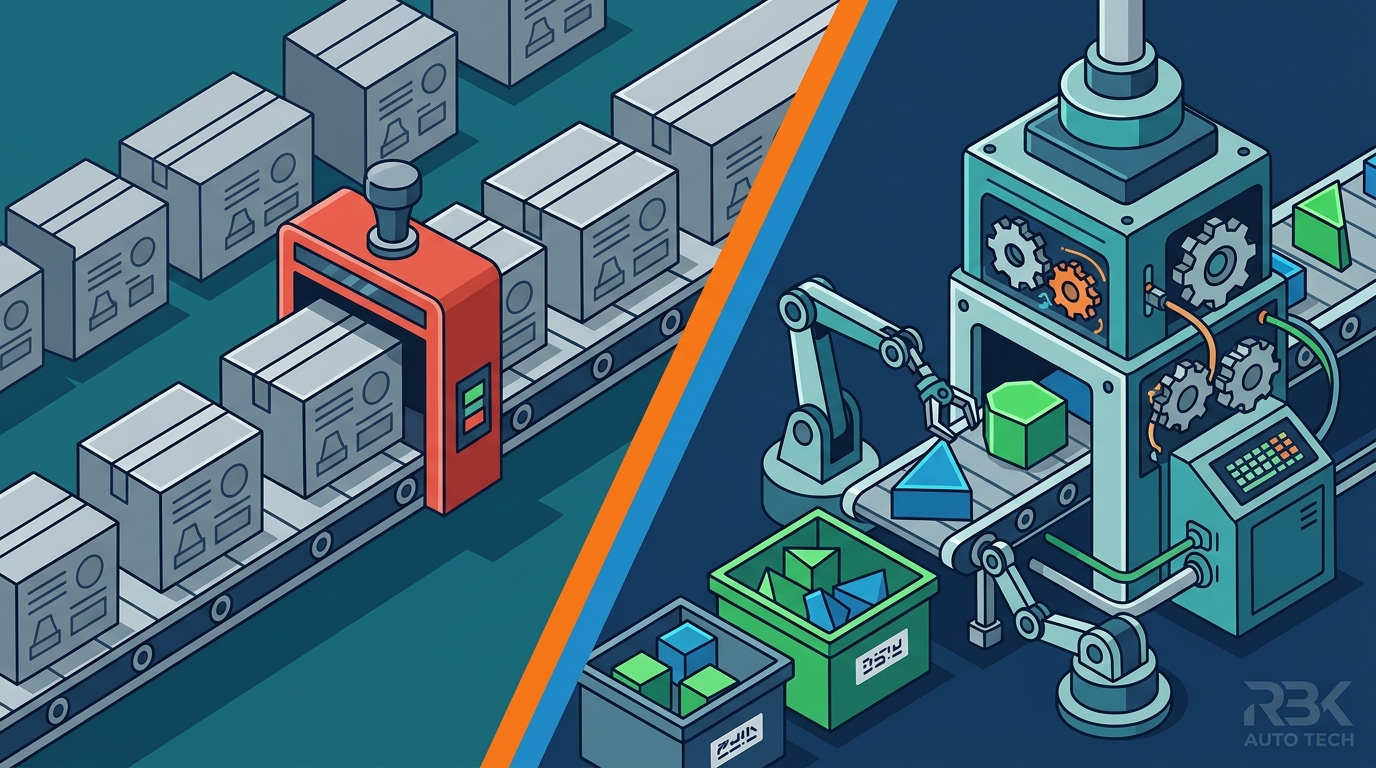
Most off-the-shelf automation platforms rely on a one-size-fits-all approach. They assume a linear process flow that rarely matches real-world complexity. When a client needs conditional branching based on multiple variables, standard software often fails. You end up building clunky workarounds that are difficult to maintain. Custom solutions eliminate these bottlenecks by coding the logic directly into the system. according to Identifying Opportunities for For additional details, review the Auto Repair Services in.
Identifying Automation Candidates
Not every process benefits from automation. You must identify tasks that are repetitive, rule-based, and high-volume. Start by mapping your current workflows to find friction points. Look for areas where data is manually transferred between systems. These are prime candidates for custom automation. By targeting these specific pain points, you maximize the return on investment for your automation efforts.
Business Process Integration
Business process integration is the connection of disparate systems to share data and functionality seamlessly. Standard software often operates in silos, requiring manual data entry between platforms. This creates data integrity issues and slows down operations. Custom integration solutions bridge these gaps by creating a unified data flow. For businesses with unique data structures, standard integrations may not map correctly. Custom middleware ensures that data moves accurately between your CRM, ERP, and other tools.
The Cost of Data Silos
Data silos prevent teams from having a single source of truth. When systems do not communicate, employees waste time reconciling discrepancies. This leads to errors in reporting and decision-making. Custom integration breaks down these barriers. It allows real-time data synchronization across your entire tech stack. This improves visibility and accountability across departments.
Mapping Data Flows
Before building integrations, you must map your data flows. Identify which systems need to exchange data and in what format. Standard APIs may not support the specific fields you need. Custom integration developers can create bespoke connectors that handle complex data transformations. This ensures that your systems speak the same language without manual intervention.
Custom Software Development
Custom software development is the process of creating software tailored to specific business requirements. Unlike standard software, which serves a broad market, custom software is built for one client. This allows for precise alignment with your business goals. You control the features, user interface, and functionality. There is no bloatware or unnecessary features to navigate. This results in a more efficient and user-friendly experience for your team.
Agile Development Methodologies
Choosing the Right Tech Stack
The choice of technology stack is critical for custom software. It must align with your current infrastructure and future scalability needs. Standard software vendors choose their stack for mass appeal. Custom developers choose the stack for your specific performance and integration requirements. This ensures that your software is robust, secure, and easy to maintain over time.
Custom Workflow Automation
Handling Complex Decision Trees
Many business processes involve complex decision trees that standard software cannot handle. For example, a workflow might require approval from different managers based on the value of a transaction. Standard tools often lack the flexibility to model this logic. Custom automation can implement these rules precisely. This ensures that the workflow follows your exact business policies without manual oversight.
Scalability and Adaptability
Business needs change over time. Custom workflow automation can be updated to reflect these changes. You can add new steps, modify conditions, or remove obsolete tasks. Standard software updates are controlled by the vendor and may not align with your needs. Custom solutions give you full control over the evolution of your workflows. This adaptability is a key advantage for long-term success.
System Integration
API Management and Security
Monitoring and Maintenance
Bespoke Software Development
Bespoke software development is the creation of software that is uniquely tailored to a specific client's needs. It is similar to custom software development but often implies a higher level of customization and complexity. Bespoke solutions are designed from the ground up to fit your exact business processes. They do not rely on existing templates or frameworks. This results in a highly optimized and efficient solution. It is ideal for businesses with highly unique workflows that cannot be accommodated by standard software.
Long-Term Value and Ownership
Bespoke software offers full ownership and control. You are not dependent on a vendor for updates or support. You can modify the software as your business evolves. This long-term value is a significant advantage over standard software. You avoid recurring licensing fees and vendor lock-in. The software becomes a core asset of your business, driving efficiency and competitiveness.
Comparing Custom vs Bespoke
While often used interchangeably, custom and bespoke software have subtle differences. Custom software may be based on existing frameworks or templates. Bespoke software is built entirely from scratch. The choice depends on the complexity of your requirements. If your needs are highly unique, bespoke development is the better option. If your needs are somewhat unique but can be adapted from existing solutions, custom development may suffice.
Comparison of Automation Approaches
| Approach | Flexibility | Cost | Time to Deploy | Best For |
|---|---|---|---|---|
| Standard Software | Low | Low | Fast | Common, linear workflows |
| Custom Automation | High | Medium | Medium | Specific task automation |
| Bespoke Development | Very High | High | Slow | Complex, unique business processes |
Key Takeaways
- Custom automation is superior for tailored workflows because it adapts to unique business logic.
- Standard software templates often fail with complex decision trees and non-linear processes.
- Business process integration eliminates data silos and improves data integrity.
- Custom software development allows for precise alignment with business goals.
- Bespoke software offers full ownership and long-term value without vendor lock-in.
- System integration requires robust security and monitoring for reliability.
- Agile methodologies reduce risk and allow for faster time-to-value in custom projects.
- Choosing the right approach depends on the complexity and uniqueness of your workflows.
Frequently Asked Questions
Is custom automation more expensive than standard software?
Custom automation typically has a higher initial cost than standard software. However, it can save money in the long run by reducing manual work and errors. The return on investment depends on the complexity of your workflows and the volume of tasks automated.
How long does it take to develop custom software?
The timeline for custom software development varies based on complexity. Simple projects may take a few weeks, while complex bespoke solutions can take several months. Agile methodologies help deliver value in stages, allowing you to see progress early.
Can standard software be customized to fit my workflows?
Standard software can be customized to some extent, but there are limits. If your workflows deviate significantly from the standard template, customization may become difficult and costly. In such cases, custom development is often a better option.
What is the difference between custom and bespoke software?
Custom software may be based on existing frameworks or templates, while bespoke software is built entirely from scratch. Bespoke solutions offer a higher level of customization and are ideal for highly unique business processes.
How do I know if I need system integration?
You need system integration if you use multiple software systems that do not communicate with each other. If you are manually entering data between systems, integration can save time and reduce errors. Custom integration ensures that data flows accurately between your specific systems.
Is custom software secure?
Yes, custom software can be highly secure. You can implement robust security protocols, including encryption, authentication, and access controls. Custom solutions allow for tailored security measures that meet your specific compliance requirements.
Can I modify custom software after it is built?
Yes, custom software can be modified after it is built. You have full ownership and control over the code. You can add new features, modify existing ones, or remove obsolete tasks. This adaptability is a key advantage of custom solutions.
What are the risks of using standard software for unique workflows?
The main risks include reduced efficiency, increased manual work, and potential errors. Standard software may not support your specific business logic, leading to workarounds that are difficult to maintain. This can result in higher long-term costs and reduced user satisfaction.
Conclusion
Choosing the right automation approach is critical for business efficiency. Custom automation and bespoke software development offer the flexibility needed for tailored workflows. They adapt to your unique business logic rather than forcing you to adapt to rigid templates. By investing in custom solutions, you gain full control over your processes and data. This leads to improved efficiency, reduced errors, and long-term value. For businesses with complex and unique workflows, custom automation is the superior choice. It ensures that your technology aligns perfectly with your business goals. Contact RBK Auto Tech to discuss how tailored solutions can optimize your operations.