

Where to Find Custom Automation Services in Austin TX
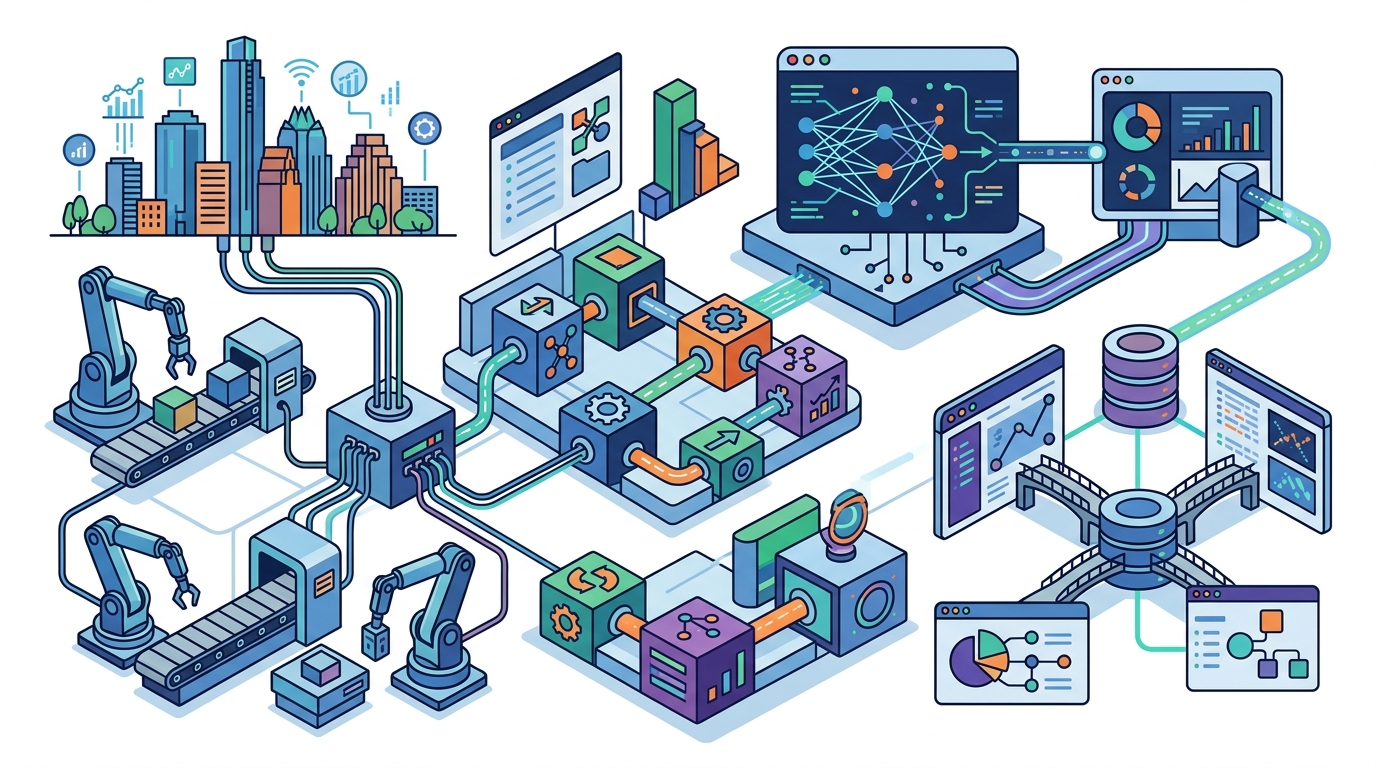
Local businesses in Austin can find custom automation services through specialized software agencies, independent consultants, and enterprise technology partners. These providers build tailored workflows, AI models, and system integrations to solve specific operational bottlenecks. This guide covers workflow automation, AI implementation, and custom integrations to help you identify the right local partner.
Workflow Automation
Workflow automation is the use of software to execute repetitive business processes without manual intervention. In the Austin market, agencies focus on connecting disparate tools to eliminate data entry and speed up operations. Local providers typically build these systems using low-code platforms or custom scripts tailored to your specific industry needs. according to AI Course for
Identifying Automation Opportunities
Choosing the Right Platform
Most local automation services in Austin utilize established platforms like Zapier, Make, or custom Python scripts. The choice depends on your technical debt and budget. Low-code platforms are faster to deploy but may hit scaling limits. Custom scripts offer more flexibility but require ongoing maintenance. Ensure your chosen provider has experience with the specific tools in your current tech stack. For additional details, review the Contact RBK Auto Tech.
AI Implementation
AI implementation is the process of integrating artificial intelligence models into existing business operations to enhance decision-making or automate complex tasks. Austin has a strong ecosystem of AI-focused startups and consultants who can help you deploy these technologies. Local experts can guide you through the ethical and technical considerations of using AI in your specific industry. according to Local BBB BBB For additional details, review the About RBK Auto Tech.
Practical AI Use Cases
Evaluating Local AI Partners
The Austin tech scene offers a wide range of AI capabilities, from simple machine learning models to large language model integrations. Look for partners who prioritize data privacy and security, especially if you handle sensitive customer information. A reputable local agency will provide a clear roadmap for AI adoption, starting with small, measurable pilots before scaling up. For additional details, review the Car Brands Serviced in.
Custom Integrations
Custom integrations are bespoke software connections that allow different applications to communicate and share data seamlessly. In Austin, many businesses rely on a mix of legacy systems and modern SaaS tools that do not natively connect. Local developers build these bridges to create a unified data environment, ensuring that information flows smoothly across your entire organization.
Legacy System Modernization
Many established Austin businesses still run on older ERP or CRM systems. Custom integrations can modernize these legacy platforms without requiring a full and costly replacement. Developers can build APIs that allow new tools to interact with old databases. This approach preserves your historical data while enabling modern functionality and reporting capabilities. according to Plan a Trip
API Development and Management
Building custom integrations often involves developing and managing Application Programming Interfaces (APIs). These interfaces define how different software components interact. A skilled local team will design robust APIs that are secure, scalable, and easy to maintain. They will also implement error handling and logging to ensure that data synchronization remains reliable over time.
Comparison of Service Types
| Service Type | Primary Focus | Typical Timeline | Best For |
|---|---|---|---|
| Workflow Automation | Repetitive tasks and data movement | 2-6 weeks | Operational efficiency |
| AI Implementation | Predictive analytics and intelligent decision-making | 1-3 months | Data-driven insights |
| Custom Integrations | Connecting disparate systems and legacy software | 1-4 months | Unified data environments |
Key Takeaways
- Workflow automation eliminates manual data entry and speeds up repetitive processes.
- AI implementation requires a clear use case and a focus on data privacy.
- Custom integrations bridge the gap between legacy systems and modern SaaS tools.
- Austin offers a diverse ecosystem of local tech partners and consultants.
- Always request case studies relevant to your specific industry.
- Start with small pilots to validate solutions before full-scale deployment.
- Ensure your partner has experience with your current tech stack.
- Regular maintenance and monitoring are essential for long-term success.
Frequently Asked Questions
How much do custom automation services cost in Austin?
Costs vary widely based on complexity. Simple workflow automations may cost a few thousand dollars, while complex AI integrations can range from tens to hundreds of thousands. Always request a detailed proposal that breaks down development, licensing, and maintenance costs.
How long does it take to implement a custom integration?
Timelines depend on the number of systems involved. A simple two-way integration might take a few weeks, while a complex multi-system overhaul can take several months. A local partner should provide a realistic timeline during the discovery phase.
Do I need to hire a full-time developer for these projects?
Not necessarily. Many Austin businesses work with specialized agencies or independent consultants for project-based work. This allows you to access expert skills without the overhead of a full-time hire. You may need internal staff to manage the relationship and provide domain knowledge.
What is the difference between AI and machine learning?
AI is the broad field of creating intelligent machines, while machine learning is a subset of AI that uses data to improve performance over time. In a business context, you will often hear these terms used interchangeably, but machine learning is the primary technology driving most modern business AI applications.
How do I ensure data security with a local automation partner?
Review their security protocols and data handling practices. Ask about encryption, access controls, and compliance with relevant regulations. A reputable Austin tech firm will have established security frameworks and will be transparent about how they protect your data.
Can automation replace human employees?
Automation is designed to augment human capabilities, not replace them. It handles repetitive, rule-based tasks, freeing up your team to focus on creative, strategic, and complex problem-solving work. The goal is to enhance productivity and job satisfaction, not to reduce headcount.