

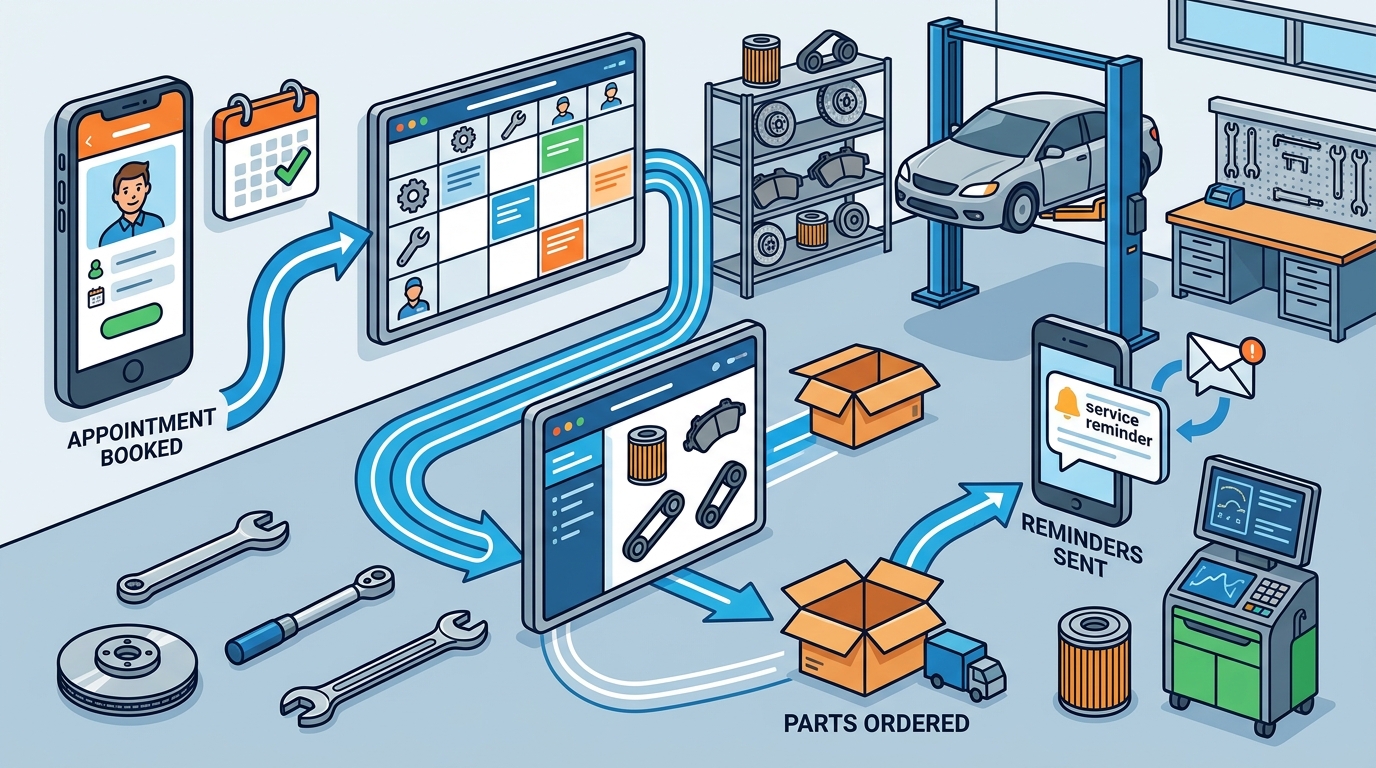
Custom workflow automation is the design of digital processes that handle repetitive tasks based on your specific operational rules. For an auto repair shop, this means automating appointment scheduling, parts ordering, and customer communication without forcing your team to adapt to rigid software. It looks like a seamless flow where a customer books online, the system checks technician availability, and a reminder is sent automatically. This approach saves time and reduces human error in daily operations. according to Customer communications management For additional details, review the Contact RBK Auto Tech.
Defining Custom Automation in the Automotive Sector
Workflow automation is the use of software to execute a series of tasks with minimal human intervention. In the automotive industry, standard software often forces shops to change their processes to fit the tool. Custom automation flips this model. It builds the tool around your existing processes. For example, if your shop uses a specific method for diagnosing check engine lights, the automation can be coded to trigger the next step only after that specific diagnostic code is confirmed.
The Difference Between Standard and Custom
Core Components of a Tailored System
A tailored automation system consists of triggers, logic, and actions. A trigger is an event that starts the process, such as a new appointment request. The logic is the set of rules that determine what happens next. The action is the final task, such as sending an email. In an auto repair context, a trigger might be a completed oil change. The logic checks if the customer is due for a tire rotation. The action sends a personalized reminder. This structure ensures that every interaction is relevant and timely.
Integrating with Existing Tools
Custom automation must integrate with the tools you already use. This includes your shop management software, inventory systems, and communication platforms. Seamless integration prevents data silos. It ensures that information flows smoothly between departments. For instance, when a part is ordered, the inventory system updates automatically. This real-time data keeps your team informed and reduces the risk of overstocking or stockouts.
Practical Examples in Auto Repair
Consider the process of handling a brake repair request. A customer calls and describes a squealing noise. The receptionist logs the issue. In a custom automated workflow, the system immediately checks the customer's vehicle history. It identifies the last brake service date. It then suggests the most likely parts needed based on the vehicle model. This information is sent to the technician before they even start the diagnosis. This preparation reduces the time the vehicle spends in the bay. It also allows the technician to provide a more accurate estimate to the customer. according to Customer communications management
Customer Communication Automation
Communication is a critical part of the customer experience. Custom automation can handle status updates without manual effort. When a vehicle is checked in, the customer receives a text. When the diagnosis is complete, they receive a detailed report. When the vehicle is ready, they get a notification. This consistent communication builds trust. It reduces the number of inbound calls asking for status updates. Your team can focus on the work rather than answering the phone.
Benefits of Building for Your Specific Needs
Reducing Operational Friction
Operational friction occurs when processes are slow or confusing. Custom automation eliminates this friction. It creates a smooth path from customer inquiry to completed service. This smoothness is visible to both your team and your customers. It reduces stress for your employees. It reduces anxiety for your customers. The result is a more positive work environment and a stronger brand reputation.
Implementation Strategy for Auto Shops
Implementing custom automation requires a clear strategy. Start by mapping your current processes. Identify the steps that are most time-consuming or error-prone. Prioritize these for automation. Begin with simple workflows. For example, automate appointment reminders first. Once this is working, move to more complex processes like parts ordering. This phased approach reduces risk. It allows you to test and refine each workflow before moving on. It also ensures that your team has time to adapt to the new system.
Choosing the Right Technology
Key Takeaways
- Custom workflow automation is designed around your specific business processes, not the other way around.
- It consists of triggers, logic, and actions that work together to automate tasks.
- Practical examples include automating diagnostic preparation and customer status updates.
- Benefits include increased efficiency, improved accuracy, and enhanced customer satisfaction.
- Implementation should be phased, starting with simple workflows and moving to complex ones.
- Choosing the right technology is critical for successful implementation.
Frequently Asked Questions
What is the main difference between standard and custom automation?
How can automation improve customer communication in an auto shop?
Automation can send timely status updates, such as when a vehicle is checked in, diagnosed, or ready for pickup. This reduces the need for manual phone calls and keeps customers informed.
What are the first steps in implementing custom automation?
Start by mapping your current processes and identifying the most time-consuming or error-prone tasks. Prioritize these for automation and begin with simple workflows.
Does custom automation require coding skills?
Not necessarily. Many platforms offer visual builders that allow you to create workflows without extensive coding knowledge. However, some complex workflows may require technical expertise.
How does automation integrate with existing shop management software?
Custom automation can integrate with your existing tools through APIs or built-in connectors. This ensures that data flows smoothly between systems and prevents data silos.
What are the benefits of automating parts ordering?
Automating parts ordering reduces manual data entry and ensures that inventory levels are updated in real time. This helps prevent overstocking or stockouts and keeps your team informed.