

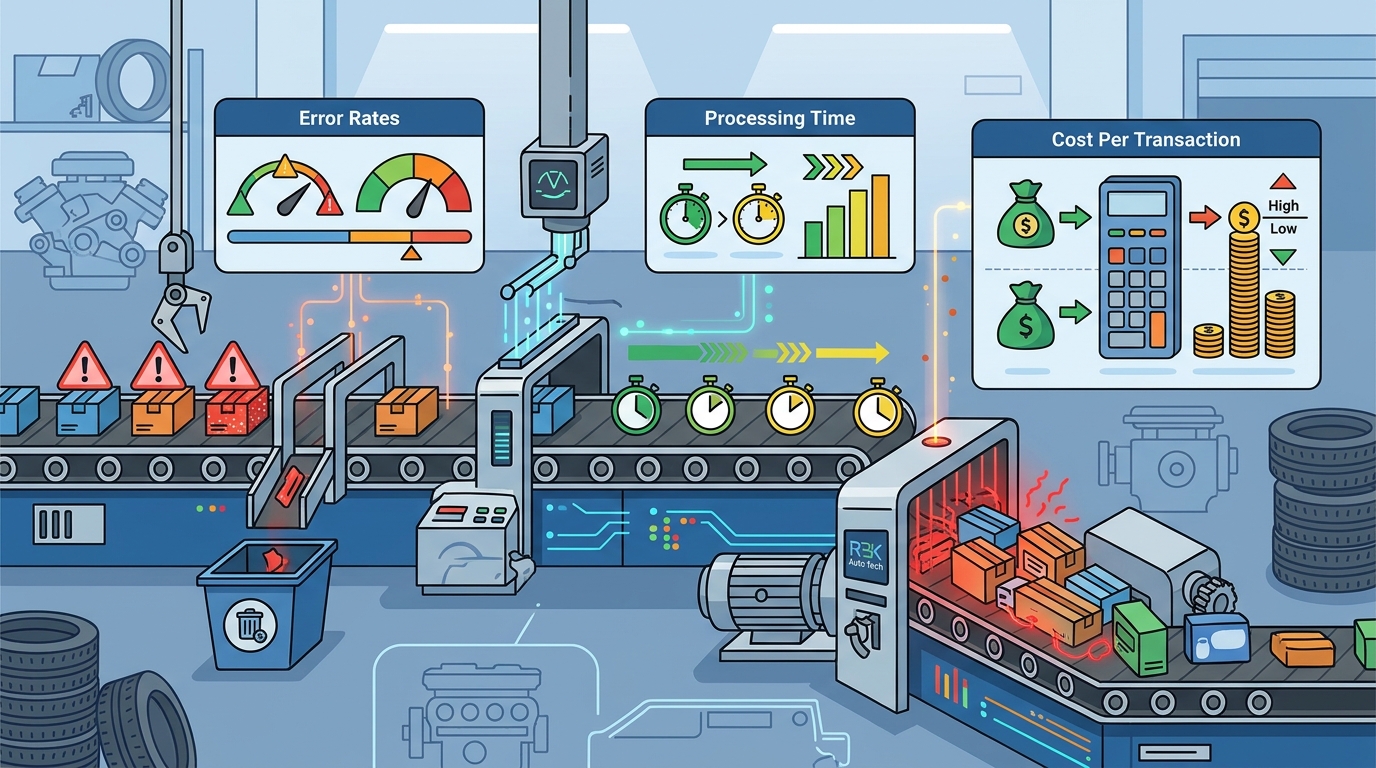
Track error rates, processing time, and cost per transaction to determine when automation needs evaluation. These metrics reveal if your systems are still efficient or if they have become bottlenecks. RBK Auto Tech uses these data points to maintain high service standards in Sacramento, ensuring that digital workflows support rather than hinder daily operations.
Operational Efficiency Indicators
Operational efficiency is the measure of how effectively a system converts inputs into desired outputs without waste. In an automated environment, this often manifests as processing speed and throughput. If your automation handles a fixed volume of tasks but takes longer to complete them, the system is degrading. For example, a scheduling tool that used to book appointments in two seconds but now takes ten seconds indicates a performance drop. This delay can frustrate customers and reduce staff productivity. Monitoring these times allows you to pinpoint exactly when the automation is no longer serving its purpose. For additional details, review the About RBK Auto Tech.
Financial Performance and Cost Analysis
Cost per transaction is the total expense of running an automated process divided by the number of completed tasks. This metric is critical for understanding the true return on investment of your automation. As software subscriptions increase or maintenance costs rise, the cost per transaction may climb. If the cost to automate a task exceeds the cost of doing it manually, the automation is no longer financially viable. Businesses should review these financial figures quarterly to ensure they are not overpaying for inefficient digital workflows. This analysis helps identify when it is time to renegotiate contracts or switch platforms. For additional details, review the Car Brands Serviced in.
Error Rates and Quality Control
Error rate is the percentage of automated tasks that require manual correction or result in a failed outcome. High error rates signal that the automation logic is flawed or that the input data is inconsistent. In service industries, even a small error rate can lead to significant customer dissatisfaction. For instance, if an automated invoice generator produces incorrect totals in five percent of cases, the financial impact and administrative burden of fixing those errors can outweigh the benefits of automation. Tracking these errors helps you determine if the system needs retraining, updated rules, or complete replacement. Quality control metrics are essential for maintaining trust in automated processes. For additional details, review the Auto Repair Services in.
Customer Experience and Satisfaction
System Reliability and Uptime
System uptime is the percentage of time that an automated system is available and functioning correctly. Downtime in critical business processes can lead to lost revenue and operational chaos. If your automation experiences frequent crashes or requires constant manual intervention to keep running, it is no longer reliable. Tracking uptime and mean time to recovery helps you assess the stability of your infrastructure. A system that is down for more than one percent of the time may not be worth the operational risk. Ensuring high reliability is a key factor in deciding whether to maintain, upgrade, or replace your automation tools.
Key Takeaways
- Monitor processing time to detect performance degradation in automated workflows.
- Calculate cost per transaction to ensure automation remains financially viable.
- Track error rates to identify when manual correction costs exceed automation benefits.
- Use customer satisfaction scores to gauge the impact of automation on user experience.
- Measure system uptime to assess the reliability and stability of your digital infrastructure.
- Review these metrics quarterly to stay ahead of efficiency drops.
Frequently Asked Questions
How often should I review automation metrics?
It is best to review key automation metrics on a monthly basis for operational health and quarterly for financial performance. This cadence allows you to catch issues early without overburdening your team with constant monitoring.
What is the most important metric for automation?
Cost per transaction is often the most critical metric because it directly ties automation to financial outcomes. However, error rates are equally important for maintaining quality and customer trust.
Can I use the same metrics for all types of automation?
While core metrics like uptime and cost apply broadly, specific industries may need additional metrics. For example, service businesses should prioritize customer satisfaction, while manufacturing might focus on throughput.
How do I know if my automation is failing?
Signs of failing automation include rising error rates, increasing processing times, and growing customer complaints. If manual intervention becomes frequent, the system is likely failing.
Should I replace automation if metrics decline?
Not necessarily. A decline in metrics may indicate a need for optimization, retraining, or updated rules. Replacement should be considered only if the system cannot be fixed cost-effectively.
Conclusion
Tracking the right metrics is essential for maintaining efficient and reliable automation. By monitoring operational efficiency, financial performance, error rates, customer satisfaction, and system uptime, you can make informed decisions about when to evaluate your systems. RBK Auto Tech emphasizes the importance of data-driven decision-making in maintaining high-quality service. To ensure your automation continues to support your business goals, schedule a consultation with our team to review your current workflows and identify areas for improvement.