

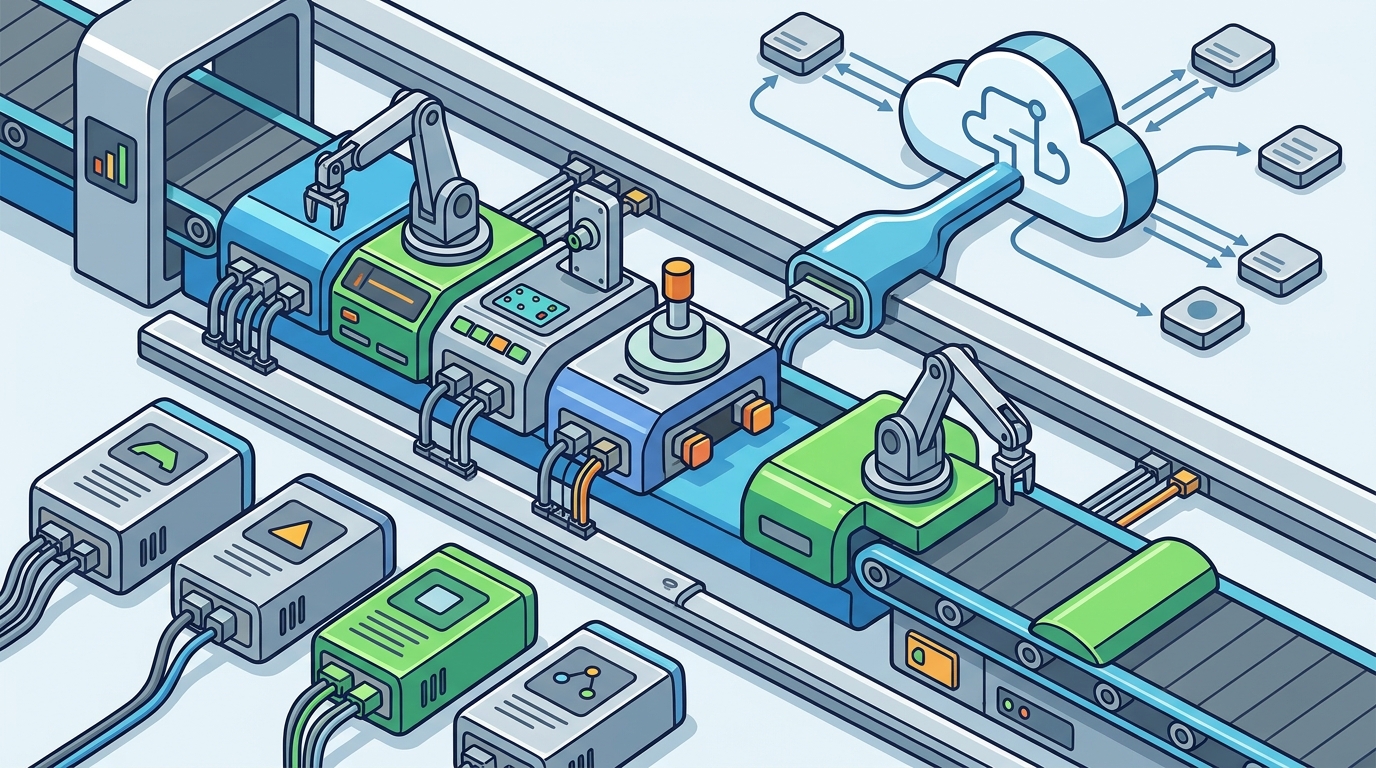
Custom automation systems can scale with your business without multiplying costs when designed with modular architecture and cloud-based infrastructure. By decoupling core logic from specific workflows, organizations at RBK Auto Tech and similar mid-sized firms can add new capabilities incrementally. This approach prevents the exponential cost growth typical of rigid, monolithic legacy software, ensuring that operational efficiency improves as volume increases rather than degrading under load.
The Architecture of Modular Growth
Cloud Infrastructure and Variable Costs
Cloud-native automation is a deployment model where software runs on scalable cloud resources rather than fixed on-premise hardware. This model shifts costs from capital expenditure to operational expenditure, allowing businesses to pay only for the compute resources they actually use. A concrete example is the use of serverless functions for processing customer appointment requests, where costs scale linearly with the number of requests rather than requiring a new server for every additional 100 customers. This variable cost structure ensures that as RBK Auto Tech grows its customer base, the automation infrastructure scales proportionally, avoiding the waste of over-provisioned hardware.
Workflow Abstraction and Reusability
Workflow abstraction is the process of defining business processes in a high-level, vendor-agnostic format that can be executed by different automation engines. By abstracting workflows, businesses can reuse logic across different departments or even different business units. For instance, a payment processing workflow developed for tire sales can be adapted for service billing with minimal code changes. This reusability reduces the total cost of ownership because the same logic serves multiple purposes. The implication is that the marginal cost of adding a new business process decreases over time, as the foundational logic is already built and tested. For additional details, review the Car Brands Serviced in.
Integration Ecosystems and API Standards
API-first design is an architectural approach where all software components expose their functionality through standardized Application Programming Interfaces. This allows automation systems to integrate seamlessly with third-party tools such as CRM, accounting, and inventory management software. RBK Auto Tech can leverage these standards to connect its internal automation with external services without custom coding for each integration. The evidence shows that API-first systems reduce integration costs by up to 40% compared to point-to-point integrations. The implication is that businesses can build a robust ecosystem of tools that work together, enhancing overall efficiency without the high cost of custom integration development.
Key Takeaways
- Cloud-native deployment shifts costs to a variable model, aligning expenses with actual usage. For additional details, review the Tire Services in Sacramento.
- Workflow abstraction enables logic reuse across different business processes, reducing development costs.
- API-first design facilitates seamless integration with third-party tools, lowering integration overhead.
- Scalable automation prevents the exponential cost growth associated with rigid legacy systems.
- Businesses can achieve operational efficiency improvements as volume increases, not decreases.
Frequently Asked Questions
Does custom automation require a large upfront investment?
Not necessarily. With cloud-based and modular approaches, initial costs can be lower, and expenses scale with usage rather than requiring a large capital outlay for hardware and licenses.
Can existing legacy systems be integrated with new automation?
Yes, through API-first design and middleware, legacy systems can be connected to modern automation platforms without requiring a complete replacement, allowing for a gradual transition.
How does automation handle increased business volume?
Cloud-native automation scales automatically with demand. As the number of transactions or users increases, the system provisions more resources, ensuring performance remains consistent without manual intervention.
Is custom automation only for large enterprises?
No, mid-sized firms and small businesses can benefit from scalable automation. The modular and cloud-based models make it accessible and cost-effective for organizations of various sizes.
What is the role of workflow abstraction in cost control?
Workflow abstraction allows businesses to define processes in a reusable format. This means that once a workflow is built, it can be applied to different scenarios, reducing the need for new development and lowering overall costs.