

Companies automate workflows without replacing legacy systems by using middleware, APIs, and integration platforms to connect old software with modern tools. This approach preserves critical data and business logic while enabling new automation capabilities. It reduces risk and cost compared to full system replacements.
Why do companies keep legacy systems?
Legacy systems often contain decades of accumulated business rules, historical data, and specialized workflows that are difficult to replicate. Replacing them requires significant time, capital, and risk. For example, a manufacturing plant might rely on a 1990s-era SCADA system that controls critical machinery. Replacing this system could halt production for months. Keeping the legacy core allows businesses to maintain operations while modernizing the edges.
How does middleware enable legacy integration?
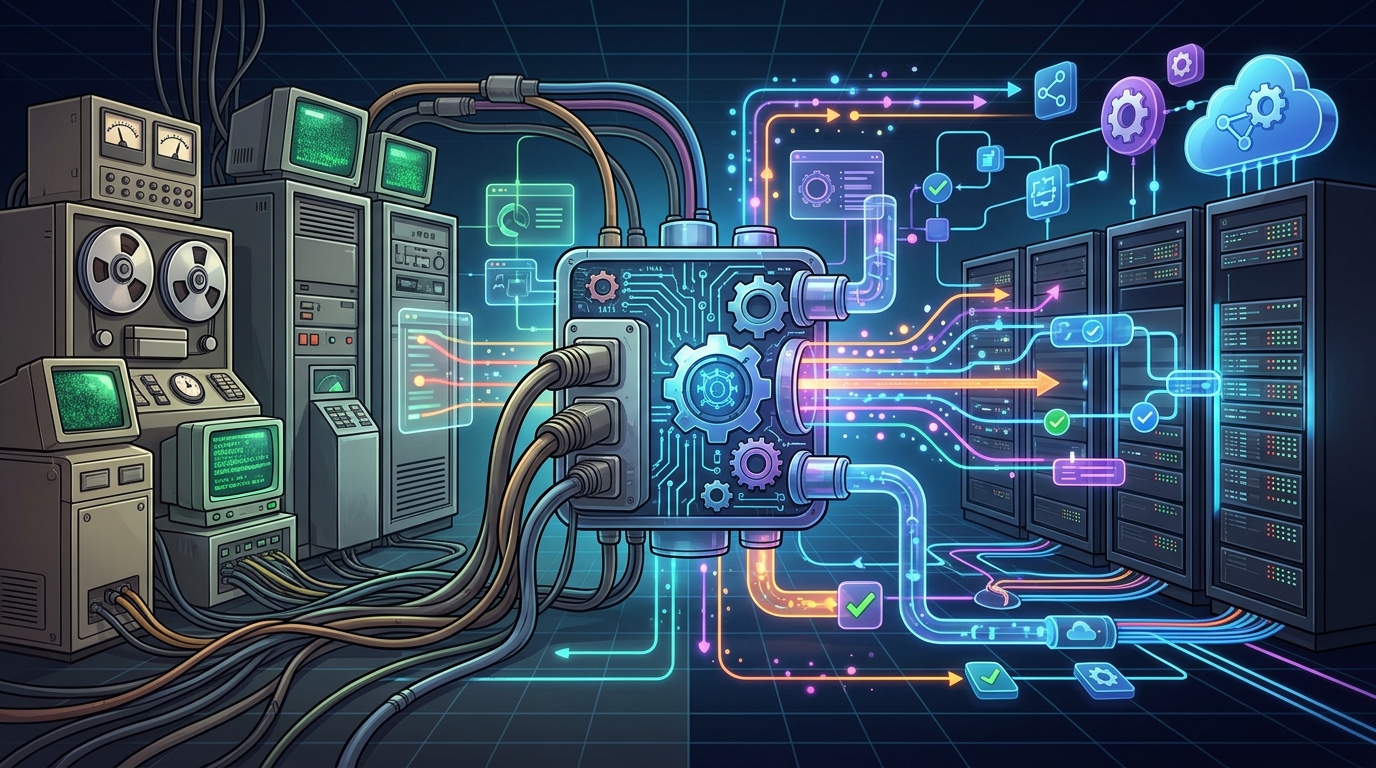
Middleware acts as a bridge between disparate systems, translating data formats and protocols. It allows legacy applications to communicate with modern cloud services without direct modification. For instance, an Enterprise Service Bus (ESB) can route messages from an old mainframe to a new customer relationship management (CRM) platform. This decoupling ensures that if one system fails, the others continue to function. It provides a stable layer for automation logic.
What role do APIs play in modernizing old software?
Application Programming Interfaces (APIs) expose specific functions or data from legacy systems to external applications. Many older systems lack native APIs, so developers often create wrapper APIs or use screen-scraping techniques as a temporary measure. A financial institution might build an API layer around a core banking system to enable mobile app transactions. This allows new digital channels to access legacy data securely. It turns monolithic systems into modular components.
How can businesses automate workflows around legacy cores?
Business Process Management (BPM) tools can orchestrate workflows that span both legacy and modern systems. These tools define the sequence of actions, routing tasks to the appropriate system based on business rules. For example, an insurance company might use a BPM tool to trigger a legacy claims processing system when a new claim is submitted via a web portal. The automation handles the handoff, reducing manual data entry. This improves speed and accuracy without touching the legacy code.
What are the risks of legacy integration?
Integrating with legacy systems introduces risks related to security, performance, and maintenance. Older systems may lack modern security protocols, creating vulnerabilities. Performance bottlenecks can occur if the legacy system cannot handle increased data loads from automation. A healthcare provider might face delays if a legacy patient records system slows down when integrated with a new telehealth platform. Mitigation strategies include caching, asynchronous processing, and robust monitoring. These measures ensure stability and protect sensitive data.
Key Takeaways
- Legacy systems are retained due to embedded business logic and data.
- Middleware bridges the gap between old and new software.
- APIs expose legacy functionality to modern applications.
- BPM tools orchestrate workflows across heterogeneous systems.
- Security and performance risks require careful mitigation.
- Incremental modernization reduces risk compared to full replacement.
Frequently Asked Questions
Is it cheaper to integrate or replace legacy systems?
Integration is often cheaper in the short term because it avoids the high costs of data migration and new system development. However, long-term maintenance of complex integrations can add up. The decision depends on the system's criticality and the cost of downtime during replacement.
Can AI be used to automate legacy workflows?
Yes, AI can analyze data from legacy systems to predict maintenance needs or optimize processes. However, AI models require clean, structured data, which may require preprocessing from legacy sources. This adds a layer of complexity but can yield significant efficiency gains.
Next Steps for Your Business
Start by auditing your current systems to identify integration points and data flows. Assess the security and performance capabilities of your legacy applications. Consult with a specialized provider to understand how similar integration challenges are handled in operational environments. They offer insights into maintaining reliable systems while adopting new technologies. Learn more: Contact RBK Auto Tech.